Food
What to eat in Kakheti after the khachapuri
Mtsvadi grilled over vine cuttings, chakapuli in April, khashlama at every supra — the dishes this region actually cooks, and when each is in season.
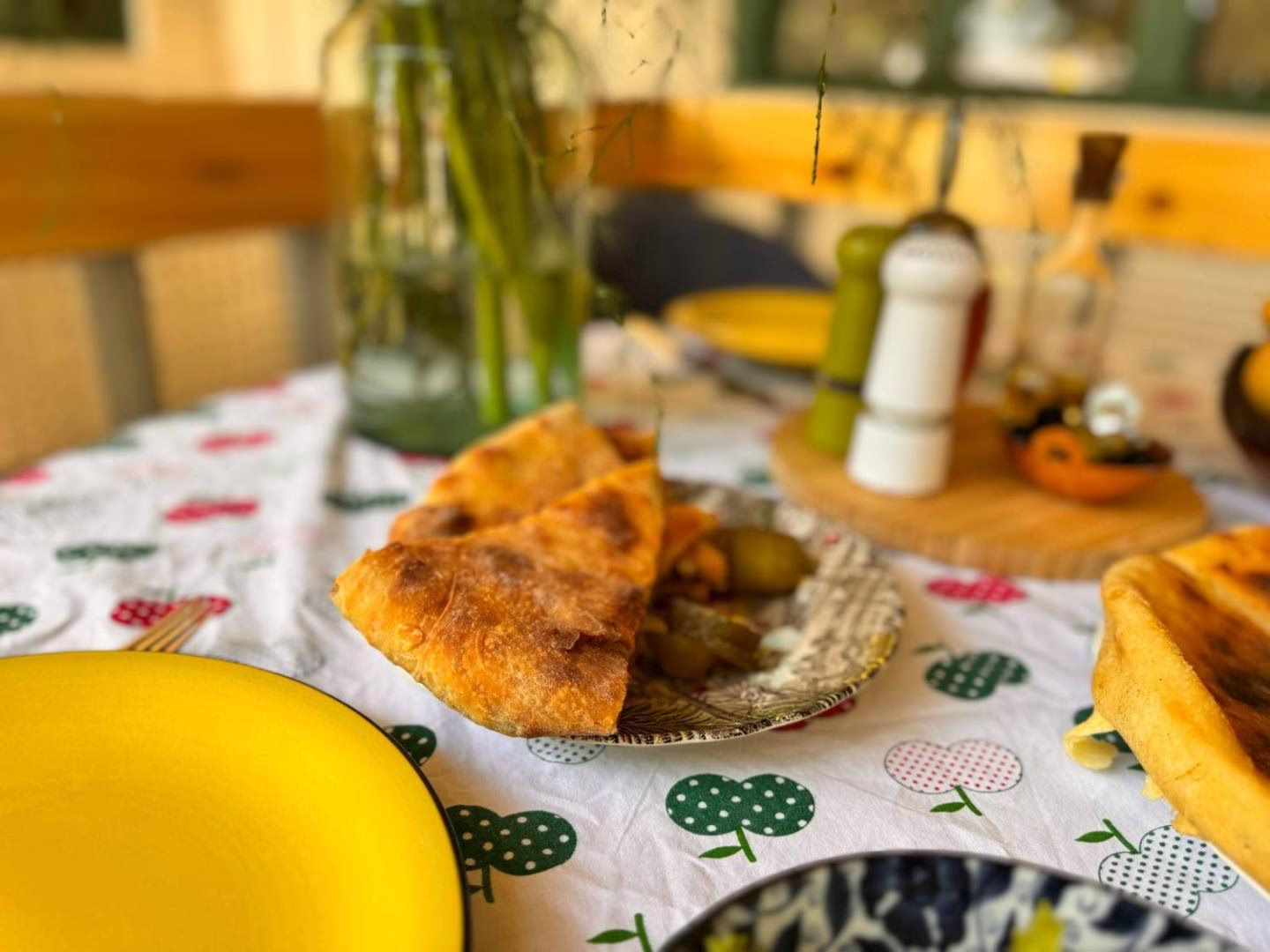
We have written elsewhere about what turns up at breakfast. This is the rest of the day, which is a different cuisine wearing the same clothes.
Two things run through nearly all of it. Meat is cooked over the prunings from the vineyard, and almost everything else is finished with walnuts, garlic and a herb you have probably not cooked with. That is Kakheti in one sentence.
Mtsvadi, the dish this region is actually famous for
Mtsvadi (მწვადი) is pork on a skewer over embers, and describing it that way makes it sound like every other kebab on earth, which it is not.
The specifics matter here in a way Georgians will happily argue about for an hour. The meat should be Kakhetian pig. The embers should be tsalami — the cuttings pruned off the vines in winter, dried and burned — or dry azalea wood. The vine cuttings are the whole trick: they burn hot and fast and put something into the meat that charcoal does not. It comes off the skewer onto raw onion and often gets glazed with pomegranate juice or with qvevri wine.
You will see men doing this in yards, at the roadside, and on the hard shoulder of the Gombori pass. It is a job for one person, standing up, holding a bundle of skewers, and it is not delegated.
Order it with tone bread and let the bread go under the skewers.
Chakapuli, if you are here between March and May
Chakapuli is lamb or veal stewed with green sour plums, white wine and an enormous quantity of fresh tarragon. It is pale green, sharp, herbal, and completely unlike what most people mean by a stew.
It is a spring dish because the plums and the tarragon are spring things, and it is what Georgians eat at Easter. If you are here in April, order it before you order anything else. By August it will still be on the menu and it will not be the same dish.
Khashlama, which will happen to you at a supra
Khashlama is beef, boiled, with garlic and herbs and very little else, served in its own broth. It sounds austere and at a good table it is the opposite — it is what appears in the middle of a long Kakhetian supra when everybody is already full, and it is the thing people go back for.
There is no version of this that photographs well. Eat it anyway.
Khinkali, and how not to embarrass yourself
Khinkali are the big pleated dumplings, filled with spiced minced meat and a great deal of broth. They come from the mountains — Pshavi, Mtiuleti, Khevsureti and Tusheti, which is administratively part of Kakheti and is four hours up a dirt road from here.
The mechanics, since nobody tells you and everybody watches:
- Pick it up by the topknot, with your fingers. Not a fork. A fork puts the broth on the table and the table will notice.
- Bite a small hole in the side first and drink the broth, then eat the rest.
- Leave the topknot on your plate. Nobody eats them, and at the end of the meal the pile is how you count what you ate.
- Black pepper on top, generously. No sauce.
Order six to start. They are bigger than they look and you will be offered more.
Lobio and mchadi — the best cheap lunch in the country
Lobio is a red bean stew, cooked slowly with coriander, blue fenugreek and walnut, often served in the clay pot it was cooked in. Mchadi is the flat cornbread that goes with it. Add pickles and a lump of cheese and that is lunch, for very little money, and it is entirely vegan without anybody having tried.
If you eat one meal in a village restaurant in this region, make it this one.
Guda cheese, and the Tusheti connection
Kakheti’s cheese is sulguni and imeruli like everywhere else, but the one to find is guda — sheep’s cheese salted and matured inside a sheepskin bag, which is what guda means. It comes down from Tusheti, where the shepherds still take the flocks up for the summer, and it is sharp, dense and considerably funkier than anything else on the table.
Ask for it by name. It is not always put out for visitors.
Tkemali, the sauce on every table
Tkemali is sour plum sauce, and there are two: the green one, made from unripe plums in spring, and the red one from ripe plums later in the year. Green goes with pork and potatoes, red with poultry and lamb, and everyone’s grandmother made it correctly and everyone else’s did not.
It is also the reason Georgian food never needs lemon.
Something to drink that is not wine
Tarragon lemonade. Bright green, faintly medicinal, and one of the more genuinely Georgian things you can put in a glass. There is also pear, cream and feijoa, which is exactly as odd as it sounds. Every shop has them cold.
And matsoni, the local yoghurt, drunk as much as eaten.
The sweet end
Georgian desserts are mostly grapes, walnuts and patience.
- Churchkhela — walnuts on a string, dipped in thickened grape juice and dried, made at rtveli from the juice that is not going to become wine.
- Tklapi — fruit leather, usually plum, sold in sheets at the market. Sour, chewy and the best thing to put in a rucksack.
- Kaklucha — caramelised sugar and walnuts, sometimes called royal candy; the recipe is credited to Mariam Orbeliani and her cook in the nineteenth century.
Sugar as a category is not really the point here. The fruit is.
What is good when
| Season | Order |
|---|---|
| March – May | Chakapuli, green tkemali, wild herbs, the first cheese |
| June – August | Mtsvadi, salads, apricots, peaches, figs |
| September – October | Everything, plus grapes, churchkhela being made, new tklapi |
| November – February | Lobio, khashlama, khinkali, pickles, cellar wine |
Two things about ordering
Portions are large and the table keeps filling. Order about two-thirds of what you think, and expect more food to arrive after you have stopped — especially at a supra. A table you can see the cloth through is a failure of hospitality, and your host is not going to fail in front of you.
Vegetarians do fine here. Lobio, mchadi, pkhali, badrijani with walnut, salads, pickles, mushrooms with sulguni and most of the bread are already there. Georgian Orthodox fasting means the entire cuisine has a vegan half built into it, which is a much older reason than the one people assume.
Ask us where to go and we will tell you honestly, including the places on the square we would not send our own family to.