Wine
Wineries near Telavi that are actually worth the drive
Tsinandali, Shumi, Alaverdi and the family cellars nobody lists — which wineries near Telavi to visit, what they cost, and why not to drive yourself.
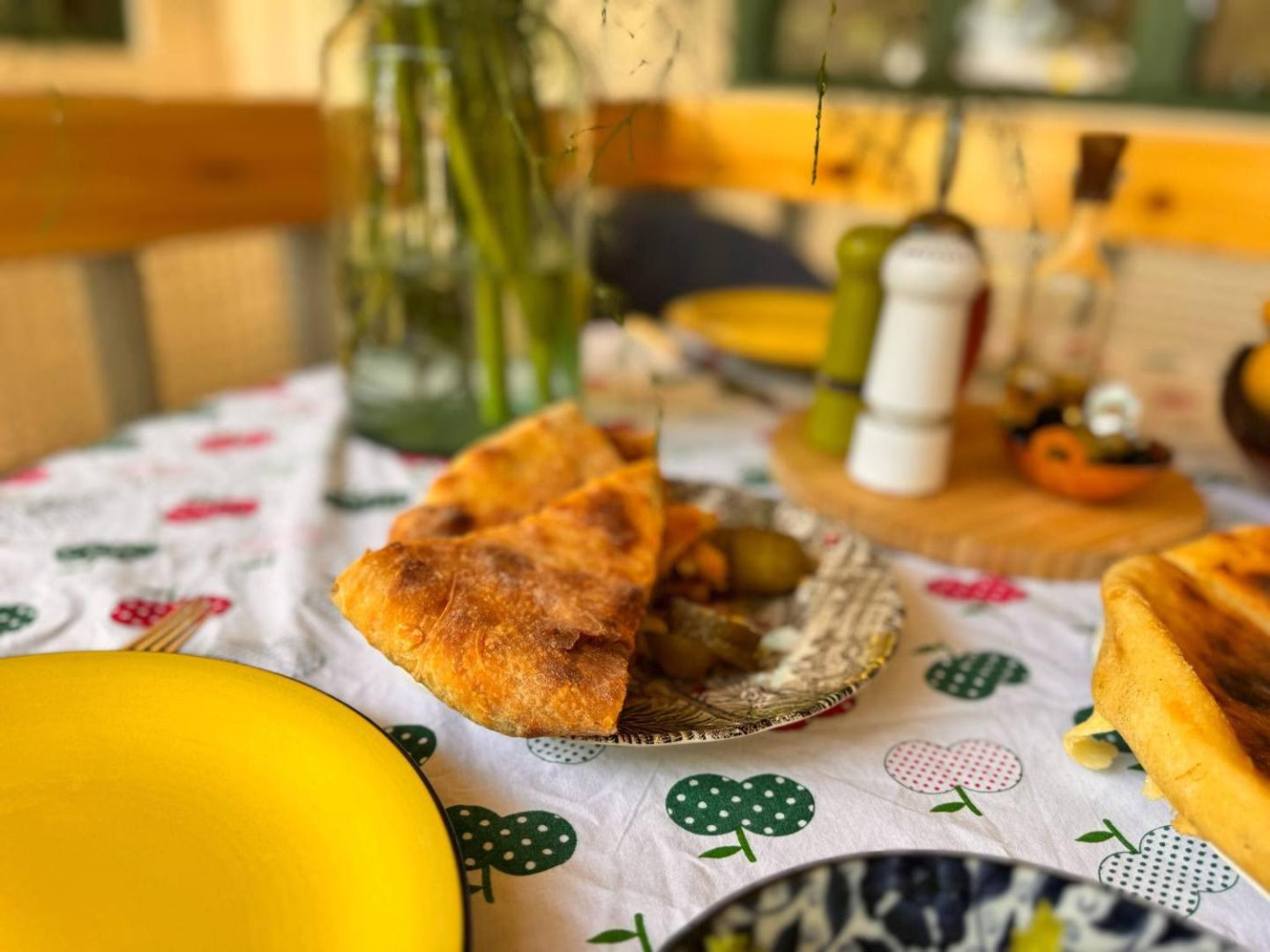
There are several hundred places to taste wine within an hour of this house, which is not a helpful number. Here is the shorter version, sorted by what kind of day you want.
First, what you are drinking
Two grapes do most of the work in Kakheti.
Saperavi is the red. It is a teinturier grape — red flesh as well as red skin, which almost no wine grape has — so it produces something extremely dark and structured. It ages well and it stains everything.
Rkatsiteli is the white, and this is where it gets interesting. Made the European way it is a crisp, unremarkable dry white. Made the Kakhetian way — whole bunches, skins, stems and all, into a qvevri buried in the floor, sealed and left for months — it comes out amber, tannic, and tasting of dried apricot and walnut skin. It is one of the oldest continuously practised winemaking methods on earth.
Ask for qvevri or kakhuri wine. If you only try one thing in Georgia, try that — there is a longer explanation of how it is made if you want it.
The polished day: Tsinandali
Tsinandali Estate, 12 km from us, was the home of Prince Alexander Chavchavadze, the man who first bottled Georgian wine in the European style in the 1830s. The house is a museum, the garden is beautiful, and the cellar holds around fifteen thousand bottles with the oldest dating to 1814.
This is the version of Georgian wine tourism with signage, opening hours and a gift shop. That is not a criticism — it is genuinely lovely, it is well run, and it is the right first stop if you want the history alongside the tasting.
The working winery: Shumi
Shumi, 9 km out, is a proper production winery that also receives visitors. There is a small vine museum attached with a collection of the indigenous varieties — and there are a lot of indigenous varieties; Georgia has over five hundred.
Tastings have historically started around 15 lari, which for what you get is close to absurd.
The one you will remember: a family marani
Somebody’s yard. Qvevri under the concrete. A grandfather with a ladle, a plate of cheese nobody asked for, and no price list because there is no price.
This is the best wine experience in Kakheti and you cannot book it. There is no website. There is often no sign. The way in is that somebody who lives here makes a phone call.
That is what we do. Tell us what you actually like — light or heavy, orange or red, curious or cautious — and we will point the day at the right cellars rather than the ones that pay commission. Usually we mix one polished estate with one family cellar, because the contrast is the education.
Worth combining with the wine
- Alaverdi Cathedral, 20 km — eleventh century, and the tallest church in Georgia until Tbilisi’s Sameba cathedral was consecrated in 2004. The monks made wine here from 1011 until the Soviet period and restarted in 2006; the cellar is part of the visit.
- Ikalto Monastery, 8 km — a medieval academy where Shota Rustaveli is said to have studied, with qvevri still in the ground among the ruins.
- Gremi, 28 km — the citadel of the old Kakhetian capital, up on its bluff.
There are six of these worth the drive, and two of them almost nobody stops at.
Practical things
Do not drive. This is the one piece of advice in this article that matters. Tastings here are not measured pours — a family cellar will keep filling your glass because stopping would be rude — and the road back over the Gombori pass is unlit with a serious drop on one side. The drink- driving limit in Georgia is effectively zero and enforcement is real. Take a driver; we can arrange one.
Call ahead. Most small wineries want a phone call or a WhatsApp message rather than an online booking, and many will not be set up for walk-ins.
Take cash. The estates take cards. The family cellars do not.
Buy the bottle at the cellar. It will be cheaper than in Tbilisi and considerably cheaper than at the airport, and you will have met the person who made it.
How many days
One full day does three or four cellars comfortably. Two days lets you go north towards Kvareli and Gremi as well as the Tsinandali side, and gives you an afternoon for Alaverdi.
Any more than that and you are no longer on a wine trip, you are on a residency — which, to be fair, several of our guests have talked themselves into by the third morning.