Food
The supra, the tamada, and how to survive being toasted
A Georgian feast has an elected toastmaster and a fixed order of toasts. What happens, what you will be asked to do, and how to be upright at the end.
Sooner or later somebody in Kakheti will sit you down at a long table and something will begin that is not a dinner. It has a structure, an elected chairman and an order of business, and if you do not know that, you will spend the first hour wondering why nobody is drinking their wine and the fourth hour regretting having worked it out.
What a supra is
Supra (სუფრა) means tablecloth. It has come to mean the whole institution: the food, the table, the toasts and the several hours.
Two kinds. A keipi is the celebratory one — a birthday, a wedding, a harvest, a guest. A kelekhi is the funeral supra, which follows the same rules with the toasts reordered and the mood entirely different. Both are taken seriously. The supra has been on Georgia’s national list of intangible cultural heritage since 2017.
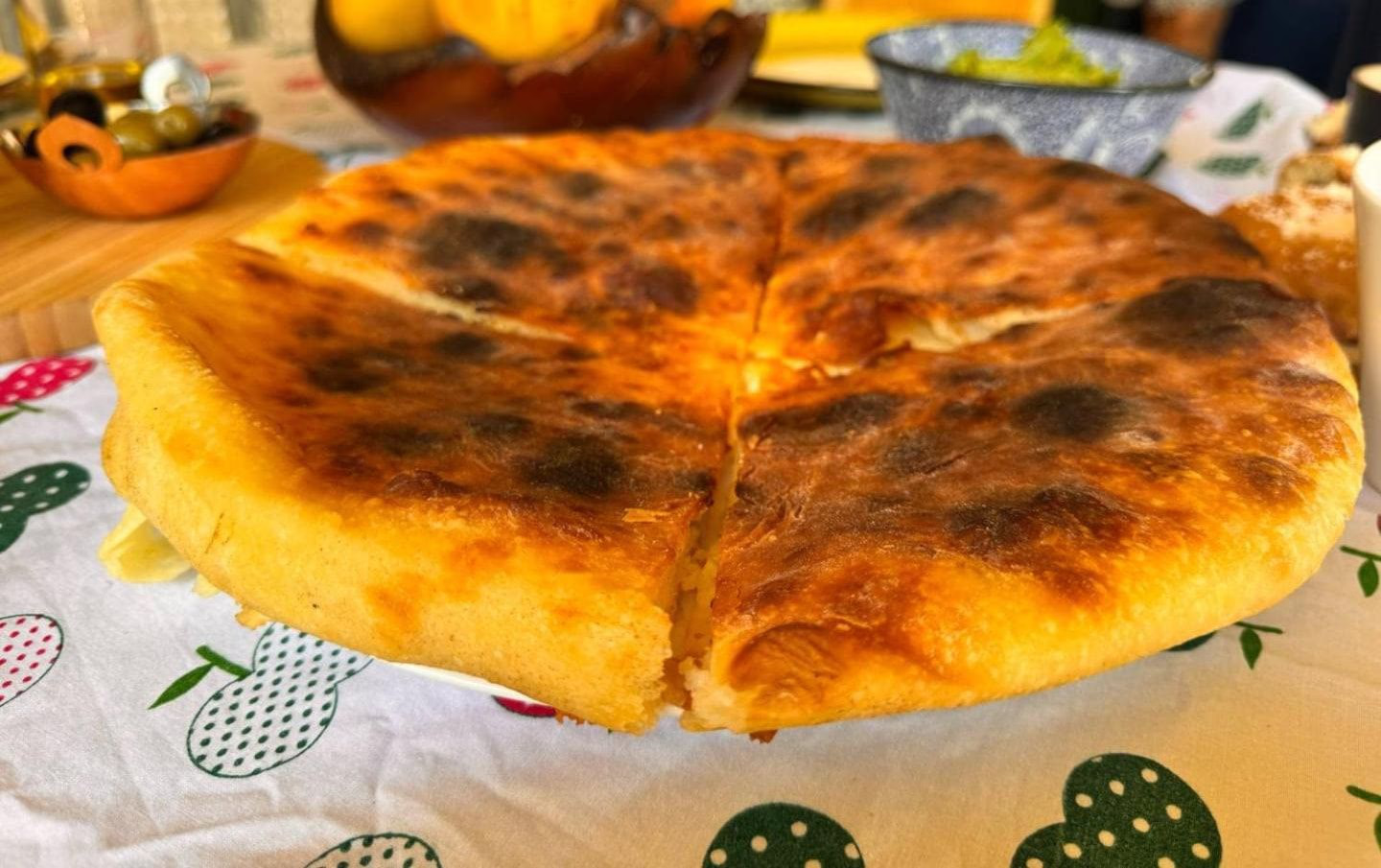
The food arrives all at once and stays. Plates get stacked on plates. This is deliberate: a table you can see the cloth through is a failure of hospitality, and your host will not fail in front of you.
The tamada
The tamada is the toastmaster, and the job is real. He or she is chosen by the host at the start — sometimes by acclamation, sometimes because everyone knows who it is going to be — and from that point the table runs on their schedule. Nobody drinks between toasts. Nobody proposes their own toast without being given the floor.
A good tamada is not a loud person. The job is a mixture of chairman, priest and stand-up: to find the thread of the evening, keep the order, hand it round so everyone gets to speak, and land the serious toasts without letting the table go maudlin. Being asked to be tamada in Georgia is a genuine compliment and also several hours of work.
The order of the toasts
It varies by region, by occasion and by tamada, but the shape is stable and the first one is never negotiable.
- Peace — mshvidoba. Always first.
- God, or the reason everyone is here.
- The hosts, and the hands that made the food.
- The guests — this one is where you get looked at.
- The departed. The table goes quiet. In many households you drink this one without clinking glasses.
- Parents. Then children. Then the country, the region, the vineyard, friendship, love, women, the future, and whatever the evening has produced by then.
The response to a toast is gaumarjos — literally “victory to it”. You will hear it a hundred times and you should say it.
Alaverdi
Here is the mechanism that catches visitors out.
After a toast, the tamada can pass it on — “alaverdi to you” — and the person named continues the same theme in their own words before anyone drinks. It is a relay, not a new toast. If the tamada toasted friendship and hands you the alaverdi, you talk about friendship.
You will be given one. As the guest, probably early, and possibly more than once.
Say something short and true. Thank the house, name the person who cooked, say something you actually noticed about the day. Nobody expects rhetoric from a foreigner and nobody is grading you — but they will notice if you say nothing at all, and they will remember for years if you say something honest.
Thirty seconds is plenty. It is better to be brief and mean it.
The drinking, practically
You drink at the toast, not between it. This looks restrictive and it is the only thing keeping the table upright. Wine is poured to the top and the pace is set by the tamada, so it takes discipline to sip rather than to drain, and sipping is entirely acceptable unless the toast is called bolomde — to the bottom.
The horn is different. A kantsi, the drinking horn, has no base. It cannot be put down until it is empty. If one is handed to you, that is an honour and also a commitment. You may decline; be gracious about it.
Do not toast with beer. The custom is that beer toasts are reserved for enemies. Nobody will throw you out, but somebody will explain it to you, at length.
Eat continuously. This is the actual technique. Georgians eat their way through a supra rather than drinking on an empty stomach, and the food is heavy on purpose.
Water is on the table. Drink it. Nobody minds.
And there will be singing
At some point, usually after the fifth or sixth toast, two or three people at the table will start singing in parts without discussing it first. Georgian polyphony is three independent voices, in harmonies that do not exist in western European music, and it was one of the first traditions UNESCO ever proclaimed a masterpiece of intangible heritage.
Hearing it in a concert hall is impressive. Hearing it happen spontaneously at a table in a yard in Kakheti, from people who have not rehearsed and are not performing, is a different order of thing entirely and is the reason a lot of people end up coming back.
How long this takes
Three to five hours for a lunch. Longer at rtveli. If somebody invites you to a supra at one o’clock, do not plan anything for the afternoon, and do not plan on driving at all — pours here are not measured and the drink-driving limit is effectively zero.
How to end up at one
This is the part guides skip, because there is no mechanism for it. You cannot buy a ticket to a real supra. The versions sold as day trips are a demonstration with a nice lunch attached, which is a fine lunch and not this.
What works is knowing somebody. We live here, and the families whose cellars we send guests to are people we actually know. If you are staying with us — particularly during rtveli, when every household in Kakheti is already at a table — tell us and we will make the call.
Bring nothing but an appetite and a short toast you have thought about in advance. It will get used.